Washer and dryer buying guide: size, venting and placement
Laundry is a daily chore, so the right machines and the right spot make a real difference. Here is what to compare before you buy.
Front-load or top-load
Front-loaders use less water, spin clothes drier and can stack or sit under a counter. Top-loaders are easy to load without bending and are often simpler. Browse washers and dryers.
Sizes and stacking
Full-size pairs are usually about 27 inches wide each. Compact 24-inch machines fit closets and condos, and many front-load pairs stack to save floor space. Measure doorways and stairs for delivery.
Dryers: vented or ventless
A vented dryer needs a duct to the outside. Ventless condenser and heat pump dryers need no duct, which opens up closets and interior rooms, but cycles can take longer. Electric dryers usually need a 240V circuit; gas dryers need a gas line.
Where to put it
A laundry near the bedrooms saves trips up and down stairs. Upstairs laundry should have a drain pan and good shutoff valves. See laundry room ideas and the laundry room cost guide.
Finish the room
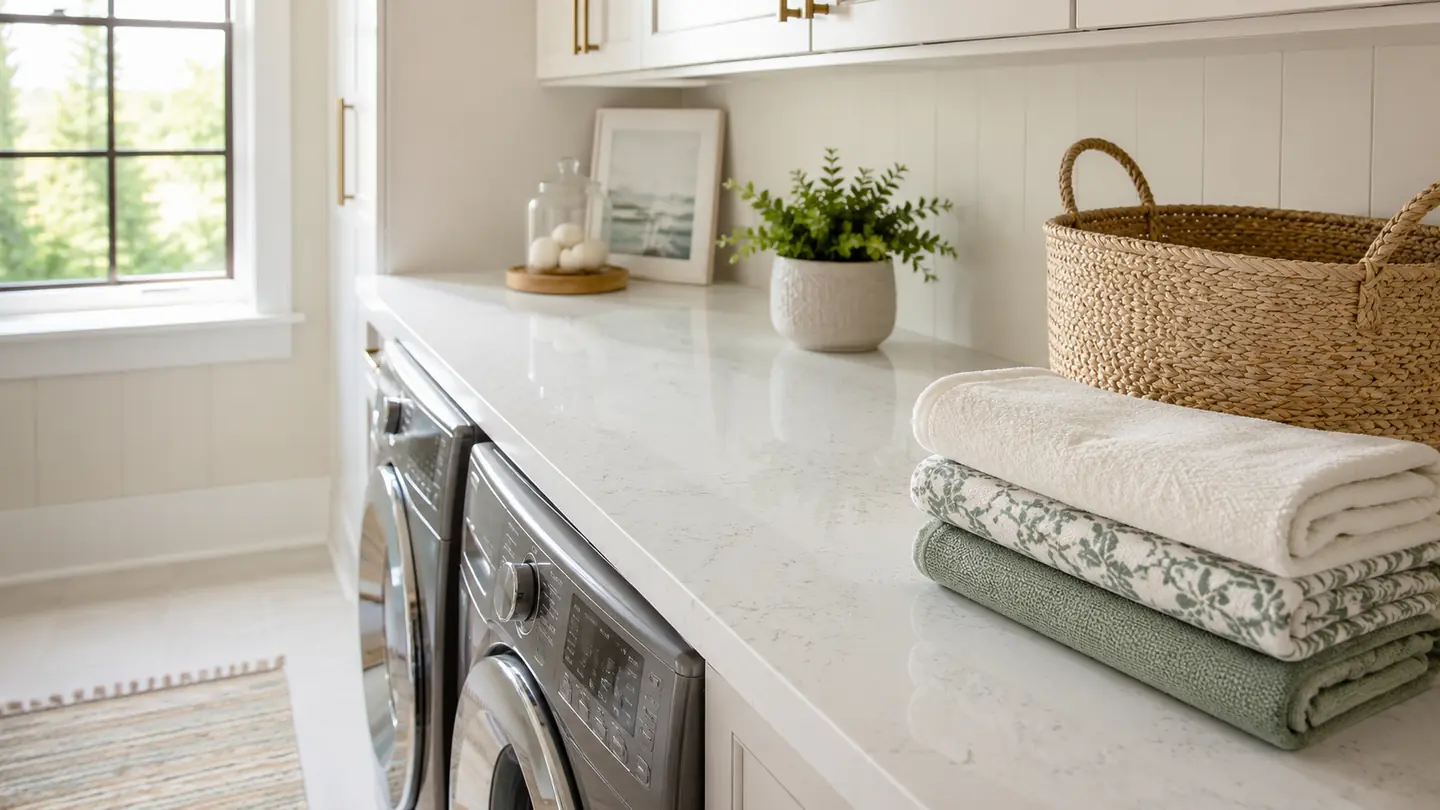
A counter over front-loaders, a utility sink and cabinets turn a laundry into a real workspace. See mudrooms and laundry.
Common questions
Is front-load or top-load better?
Front-loaders use less water and stack; top-loaders are easier to load without bending. Choose by space and how you like to load.
Do ventless dryers work well?
Yes, and they need no outside duct. Cycles are often longer than vented dryers.
What size are standard washers and dryers?
Full-size machines are usually about 27 inches wide. Compact models are about 24 inches wide.
Shop washers and dryers
Order online, pick up in Keene, or ask us about installation.
Book a consult
Tell us the room, a rough budget range and when you'd like to start. We'll come back with next steps and a realistic timeline, no pressure, no mystery pricing.