Home / Countertops / Soapstone
Soapstone countertops in New Hampshire
Non-porous, chemically inert, and it gets better with age. Everything worth knowing before you choose Soapstone for a kitchen, bath or vanity, from the crew that templates, fabricates and sets it.
- Hardness
- 2–3 (soft, but forgiving)
- Heat resistance
- Maximum, set anything on it
- Porosity / sealing
- Non-porous · oil or wax, no sealing
- Price tier
- Mid to premium
Where Soapstone comes from
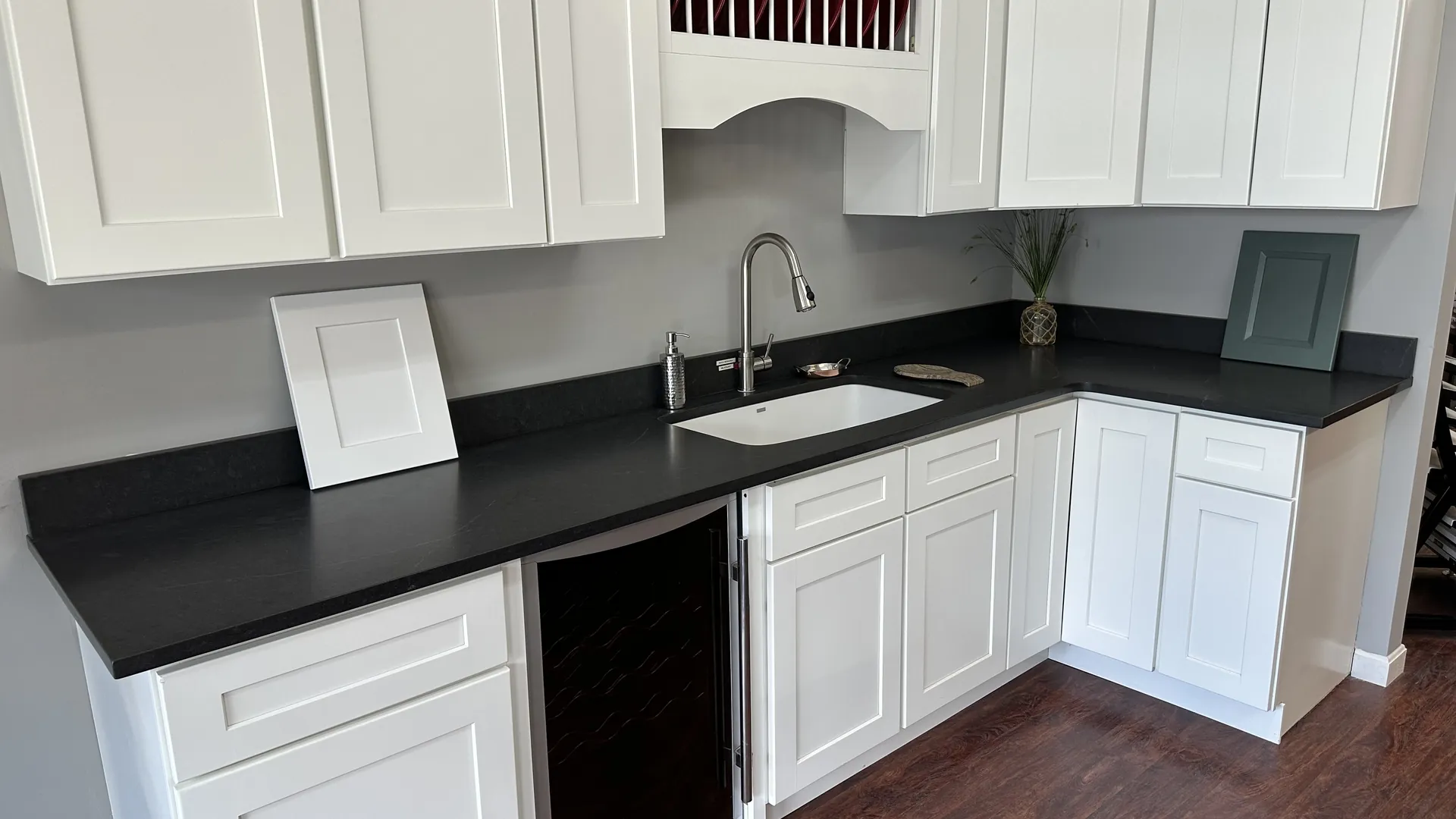
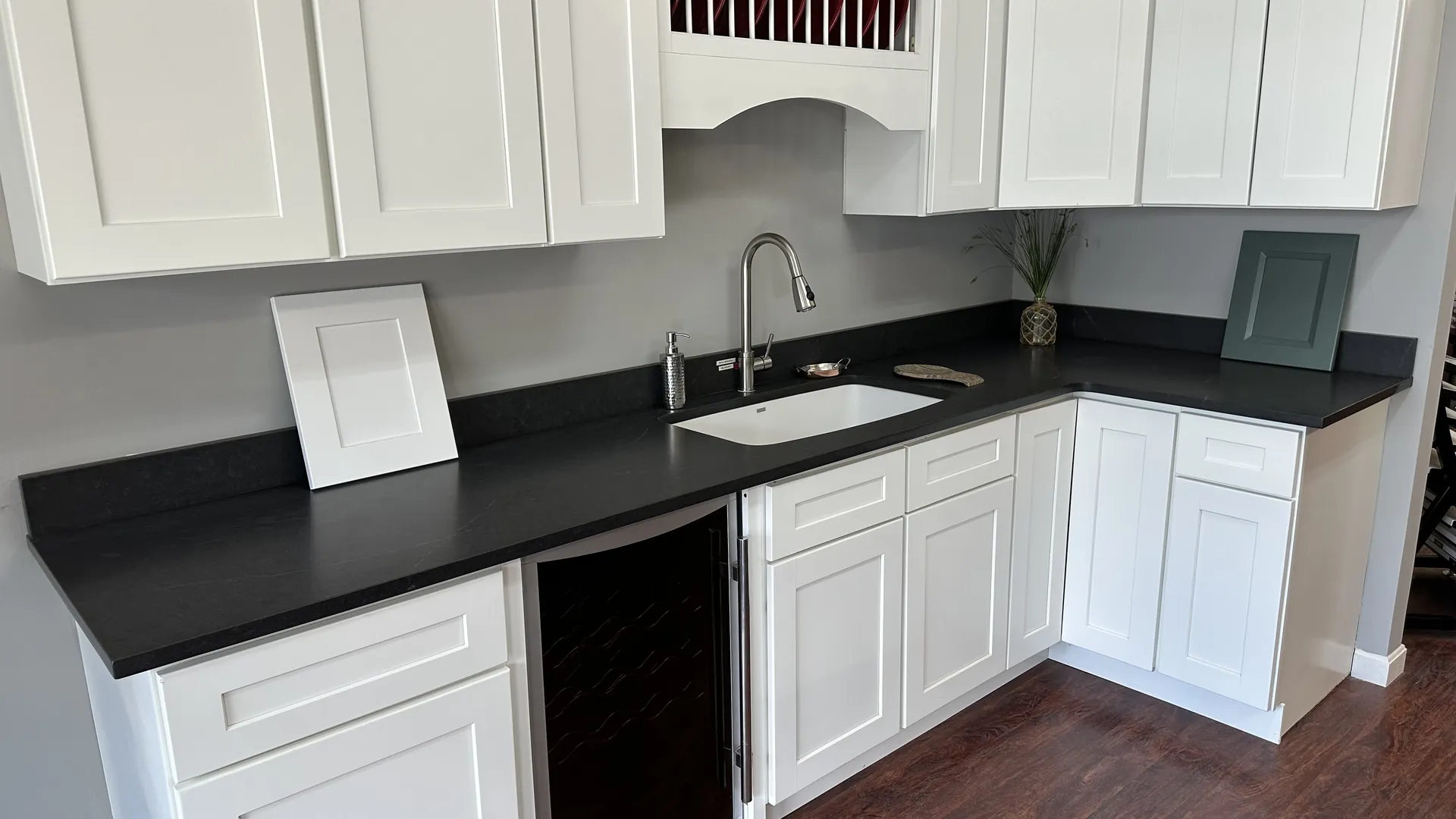
Soapstone is a metamorphic rock rich in talc, which gives it a soft, soapy feel and its workability. Architectural soapstone for countertops has less talc and more of the harder minerals, so it's durable enough for daily kitchen use.
How it holds up, and what it asks of you
Soapstone is non-porous and chemically inert, acids, wine and dyes cannot stain or etch it, and it never needs sealing. It's soft, so it will scratch and take the occasional nick, but those sand out easily and blend into the patina. Regular mineral-oil or wax treatment darkens the stone evenly and speeds the rich patina many people choose it for.
Pros
- Completely stain- and etch-proof, no sealing ever
- The best heat resistance of any countertop
- Warm, matte, tactile, nothing else feels like it
- Scratches sand right out and blend into the patina
Trade-offs
- Soft, it will scratch and nick with use
- Color deepens over time; even oiling keeps it consistent
- Limited palette, greys and greens with white veining
- Darkens permanently once oiled, that is the point
Soapstone FAQ
Won't soapstone scratch too easily?
It scratches, yes, but the scratches are the same color all the way through and sand out with fine sandpaper in minutes. It's forgiving in a way hard stones aren't.
Do I have to oil it?
No, but oiling darkens it evenly and speeds the patina. Left alone, it patinas unevenly around the sink and stove first.
Can I really set a hot pan straight on it?
Yes. Soapstone was used for woodstoves and lab benches for exactly this reason.
Is it good for a bathroom?
Excellent, non-porous, no sealing, and the soft look suits a vanity well.
See a Soapstone slab in Keene
Soapstone, plus butcher block for a warm accent run. Full slabs on the racks at 104 Emerald St, bring your cabinet door and compare in real light.
Helpful guides & tools
Book a consult
Tell us the room, a rough budget range and when you'd like to start. We'll come back with next steps and a realistic timeline, no pressure, no mystery pricing.