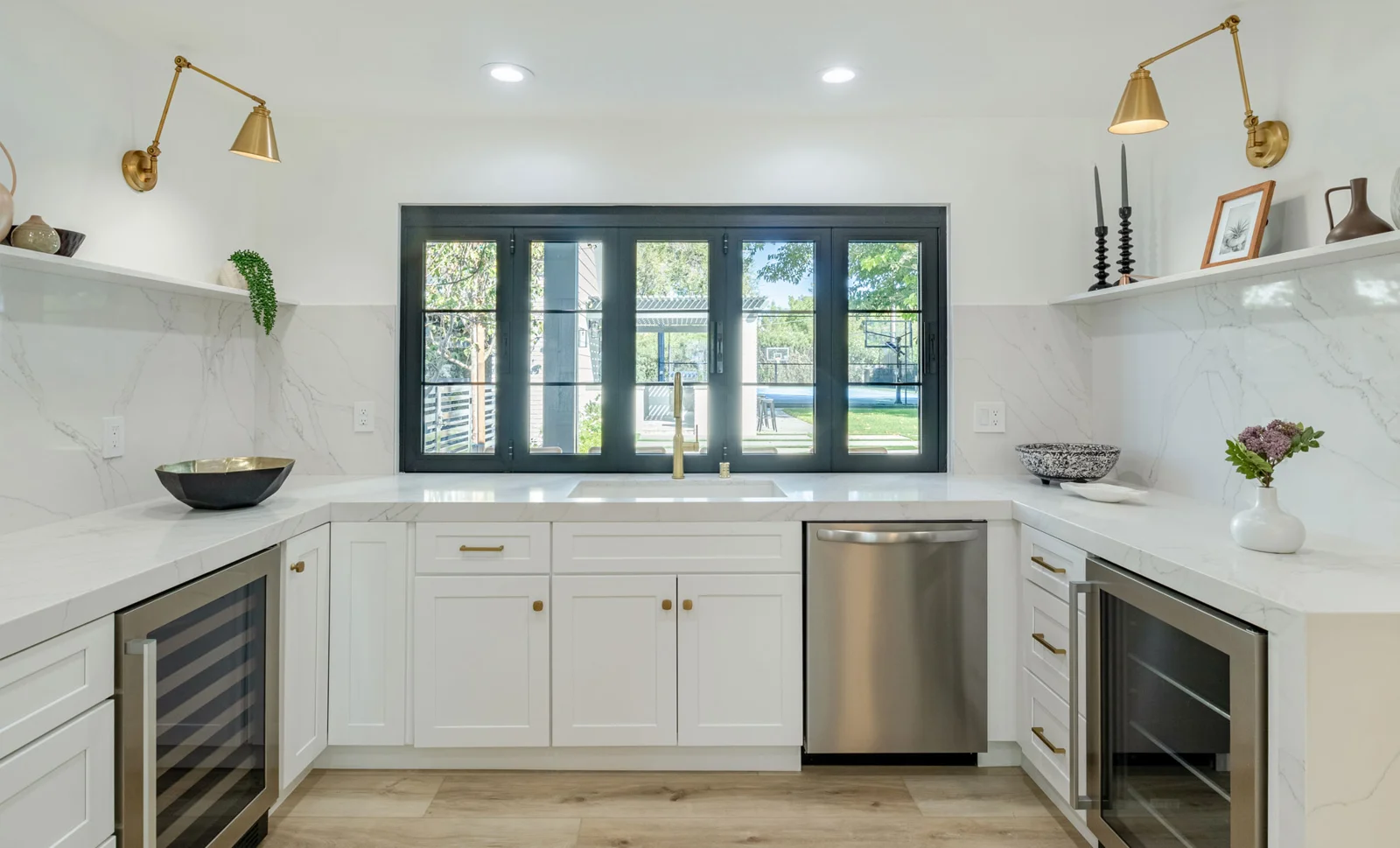
Two-tone kitchens: how to do it right
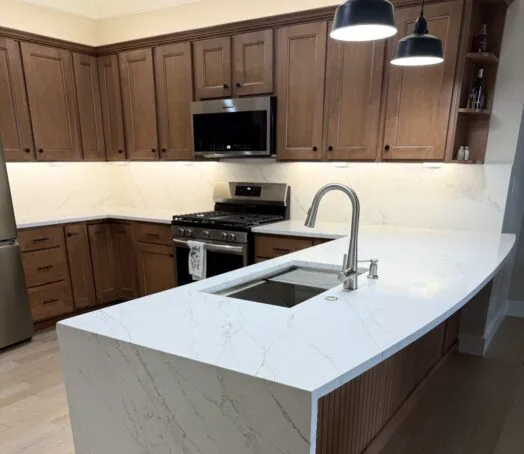
A two-tone kitchen, one color on most of the cabinets, a second on the island or the lowers, is one of the most reliable ways to add personality without the room feeling busy or dated. A few rules keep it looking deliberate.
Pick what gets the accent
- The island, the most common and most forgiving. It's a self-contained object, so a bold color there reads as a feature, not a commitment.
- The lower cabinets, dark or coloured base, lighter wall cabinets. Grounds the room and keeps the upper half bright, which matters in a north-facing New Hampshire kitchen.
- A single zone, the range wall, a hutch, or a butler's pantry in a contrasting color or a wood tone.
How many finishes
Two is a two-tone kitchen. Three is a design that needs a real reason, say a painted perimeter, a wood island, and a black steel hood surround, each doing a distinct job. Four is usually one too many. Count the metal finishes too: hardware, faucet and lighting want to be one finish, or two that are clearly intentional.
Combinations that have aged well
- Warm white perimeter + deep green or navy island
- Greige perimeter + natural white oak island
- White perimeter + black or charcoal island (needs good light)
- Two woods, light rift oak uppers, walnut island, for an organic-modern look
- Soft warm gray lowers + warm white uppers, a subtle two-tone that reads as one calm room
Tie it together
The countertop is the peacemaker, a stone that picks up both tones (a warm white quartz with gray veining over a green island and a greige perimeter, for instance) makes the two colors feel chosen together. Carry one of the two colors into the backsplash or the barstools so the accent isn't marooned on the island.
If you tire of it
The upside of putting the bold color on the island: repainting one cabinet run is a weekend and a few hundred dollars, not a kitchen. Start with the style quiz for a direction, then see real painted doors at the Keene showroom.
Book a consult
Tell us the room, a rough budget range and when you'd like to start. We'll come back with next steps and a realistic timeline, no pressure, no mystery pricing.