Quartz vs. quartzite: what's actually different
The names are one letter apart and the showroom samples can look nearly identical, so this is one of the most common mix-ups we untangle at the counter. They are not the same material, and the difference shows up in how the countertop lives with you.
The short version
Quartz is engineered, roughly 90% ground natural quartz bound with resin and pigment, made in a factory to a consistent pattern. Quartzite is a natural stone, quarried in slabs like granite or marble, formed when sandstone is cooked and compressed underground for a few million years. One is manufactured; one is dug out of the ground.
Heat
Quartzite wins. It is real stone all the way through, so a hot pan straight off the burner is a non-event. Quartz has resin in it, and resin scorches, a bad enough burn leaves a permanent dull mark. If you cook hard and never reach for a trivet, that alone can decide it.
Etching and stains
Quartz is non-porous and essentially stain-proof, lemon juice, red wine and olive oil all wipe up with soap and water, no sealing ever. Quartzite is porous and needs sealing once or twice a year (a ten-minute job). Genuine quartzite does not etch from acids the way marble does, but here is the catch: a lot of slabs sold as "quartzite" are actually soft dolomitic stone that etches like marble. We test the slab you like with a drop of acid before you commit, so you know exactly what you are buying.
Look
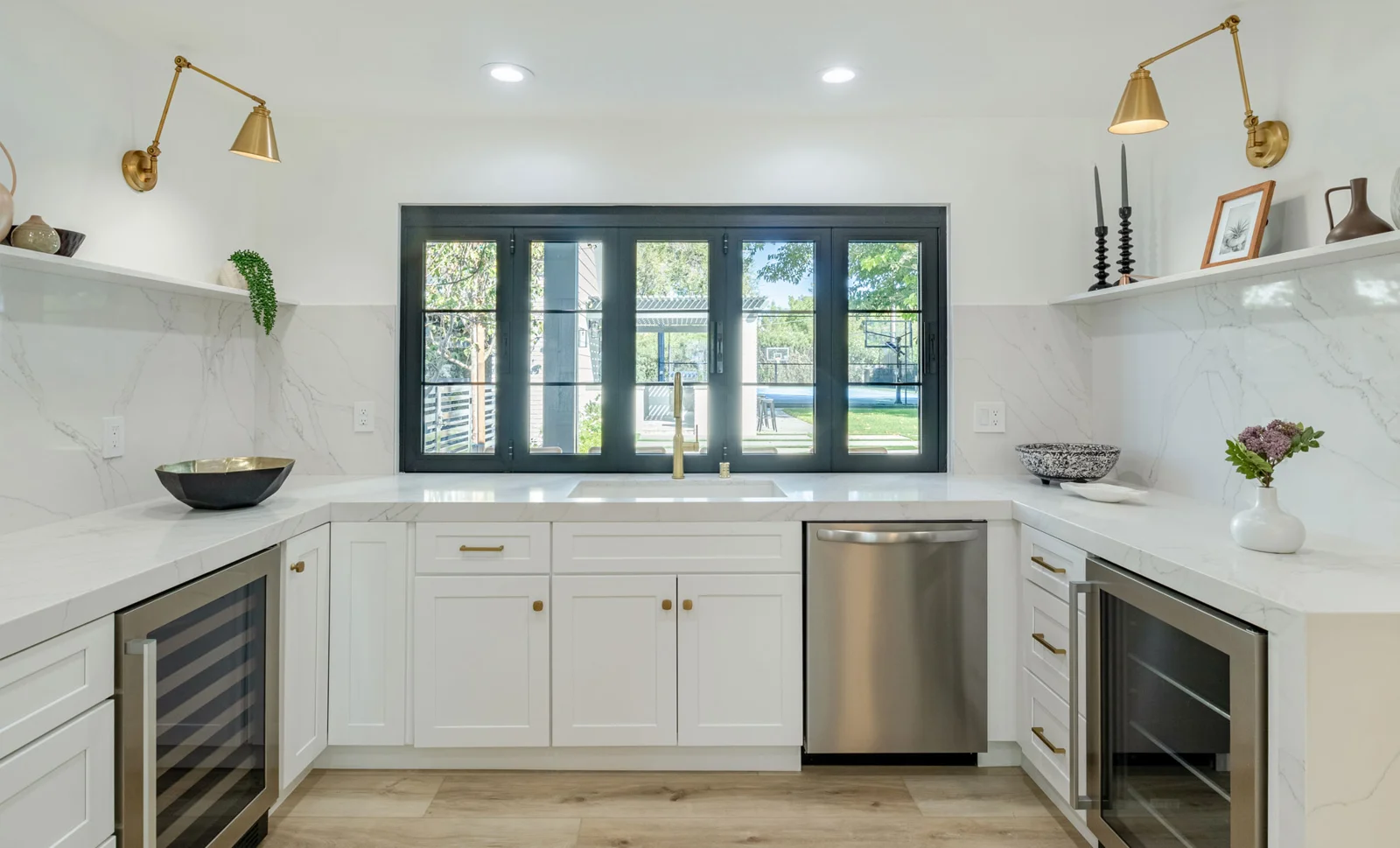
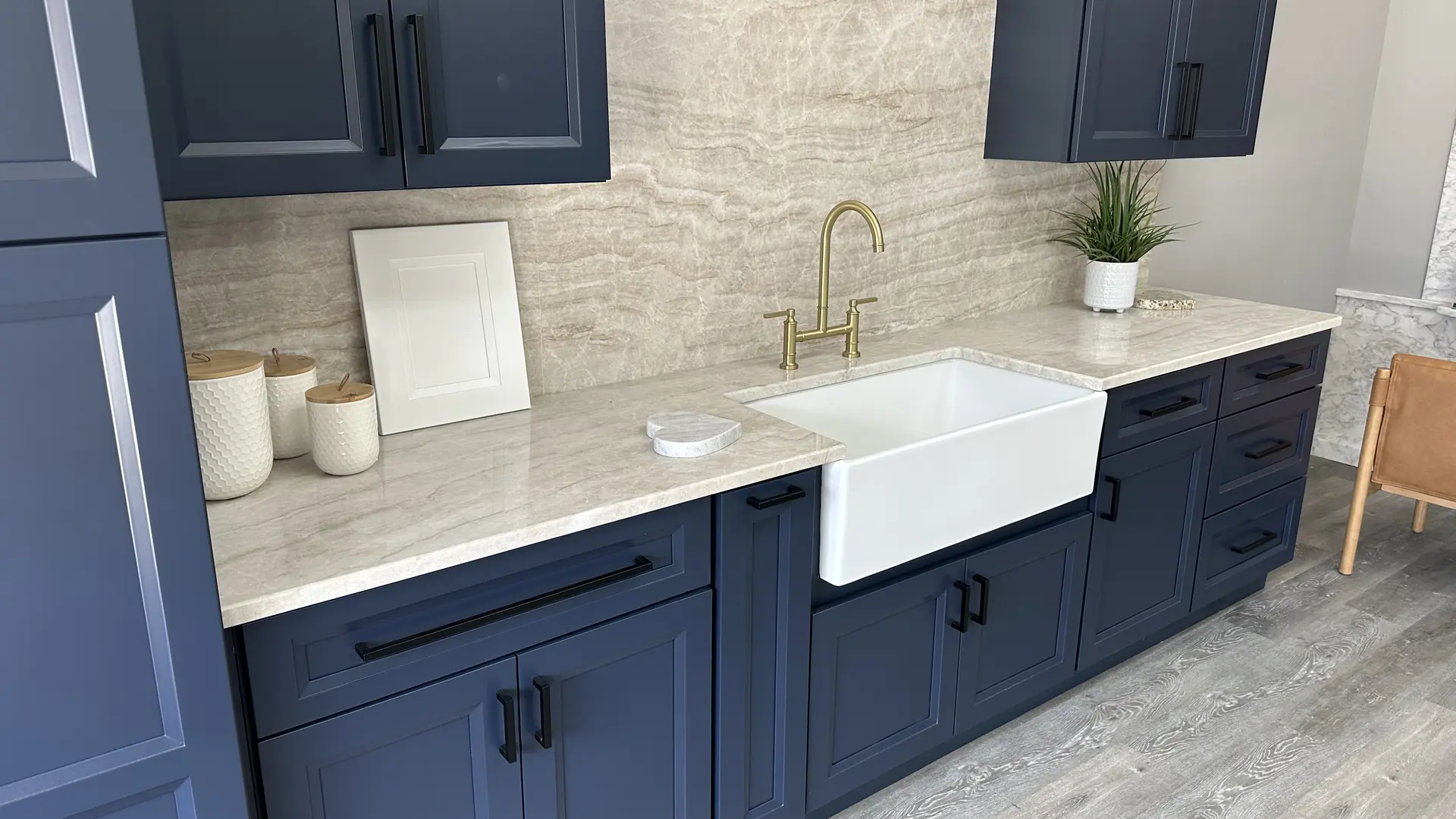
Quartzite is the reason people choose it. The white-and-gray varieties, Mont Blanc, Sea Pearl, Taj Mahal, give you the airy, veined, marble-like look with far more toughness than marble. Every slab is unique, and you are picking the actual piece that goes in your kitchen. Quartz can imitate that look convincingly and hold it across a big island with zero variation, which is exactly what some people want and what bothers others.
Cost
They overlap, but quartzite generally runs higher, it is a natural slab that has to be quarried, shipped and fabricated with diamond tooling because it is so hard. In our market, mid-range quartz lands around $55–$80 per square foot installed; quartzite typically starts a tier above that and climbs with the exotic patterns. Fabrication labor is also higher on quartzite because it is tough on blades.
Which we'd steer you toward
Want the marble look, cook seriously, and don't mind sealing twice a year and paying a bit more? Quartzite. Want a specific pattern with no surprises, zero maintenance, and a friendlier price? Quartz. If you are torn, take our countertop material finder, five questions and it will tell you which way your habits point.
See real slabs
Photos flatten both. We keep full slabs of quartz and quartzite on the racks at our Keene showroom at 104 Emerald St, bring a cabinet door and a photo of your kitchen, and we will test any quartzite you are drawn to for etching before you fall for it.
Ready to narrow it down? Run the countertop calculator for square footage and an installed range, compare quartzite and quartz in detail, or plan a showroom visit.
Book a consult
Tell us the room, a rough budget range and when you'd like to start. We'll come back with next steps and a realistic timeline, no pressure, no mystery pricing.