Gas vs charcoal vs pellet grills
Every grill cooks a good burger. The real differences are how fast you can start cooking, how hot it gets, how much smoke flavor you want and how much tending you enjoy.
Gas
Push a button and cook in minutes, with easy temperature control. Gas grills are the everyday choice and the most common built-in grill for outdoor kitchens. Natural gas saves refilling tanks; propane models can often be converted with a kit.
Charcoal
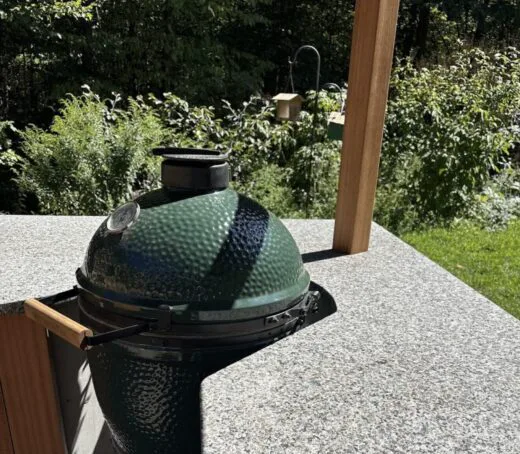
The hottest sear and classic smoky flavor, at the lowest price. It takes longer to light and more attention to control, which many cooks enjoy.
Pellet
A pellet grill feeds wood pellets automatically and holds a set temperature, so it is excellent for low-and-slow smoking. It needs electricity and does not sear as hot as charcoal.
Built into an outdoor kitchen
Built-in grills slide into a masonry or steel island. If the island has combustible framing, use the manufacturer's insulated jacket. Plan gas, power and the countertop together; see outdoor kitchen countertops and outdoor kitchens.
New England weather
Choose stainless steel grades made for outdoor use, cover the grill in winter, and keep the burners and grease tray clean before storage. Many people here grill year-round with a gas grill near the door.
Common questions
Which is better, gas or charcoal?
Gas is more convenient and easier to control; charcoal gives a hotter sear and more smoky flavor.
Are pellet grills worth it?
Yes if you like smoking meat low and slow. They hold temperature on their own but need electricity.
Can a built-in grill go in a wood-framed island?
Only with the manufacturer's insulated jacket or proper clearances.
Shop grills
Order online, pick up in Keene, or ask us about installation.
Book a consult
Tell us the room, a rough budget range and when you'd like to start. We'll come back with next steps and a realistic timeline, no pressure, no mystery pricing.