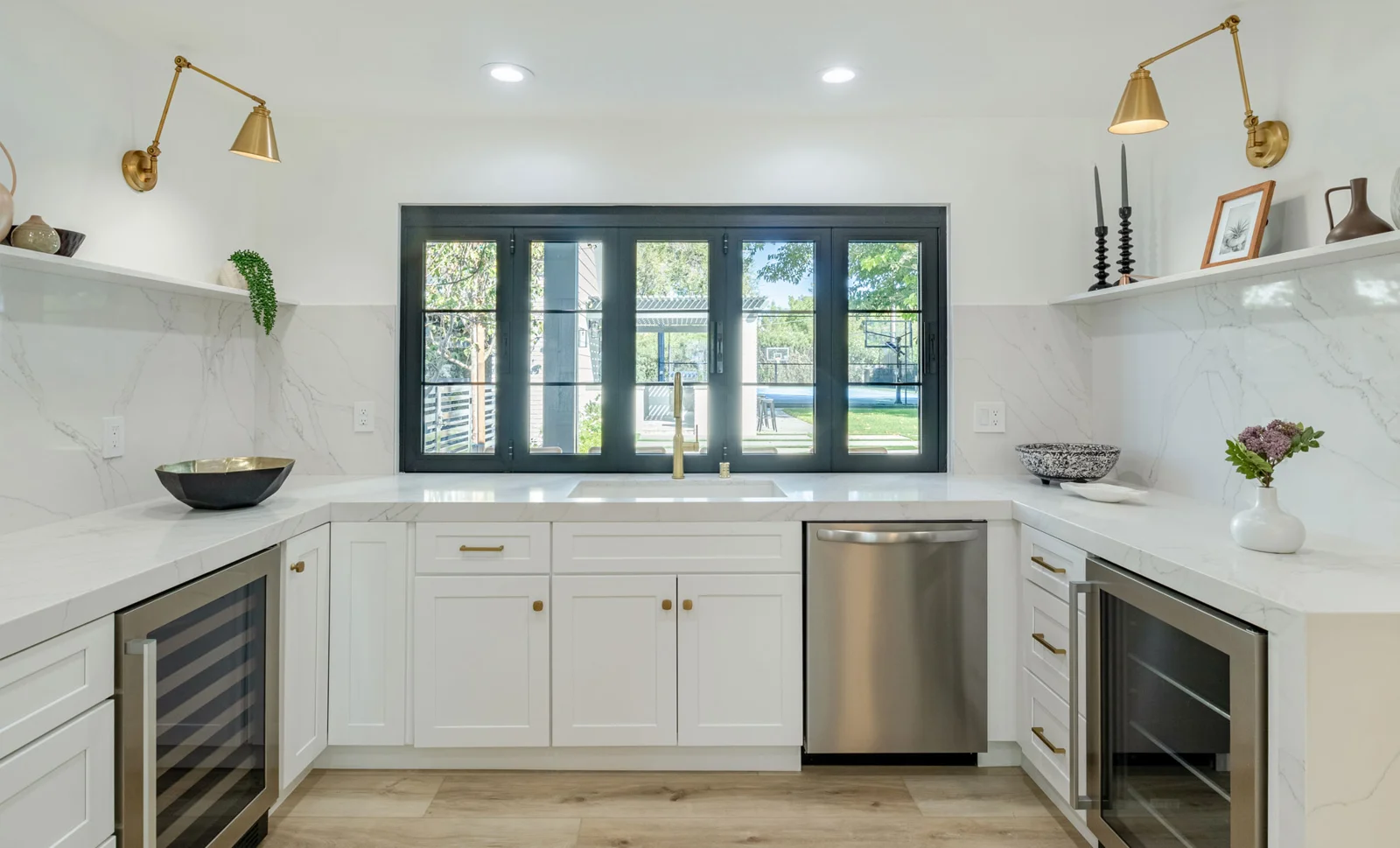
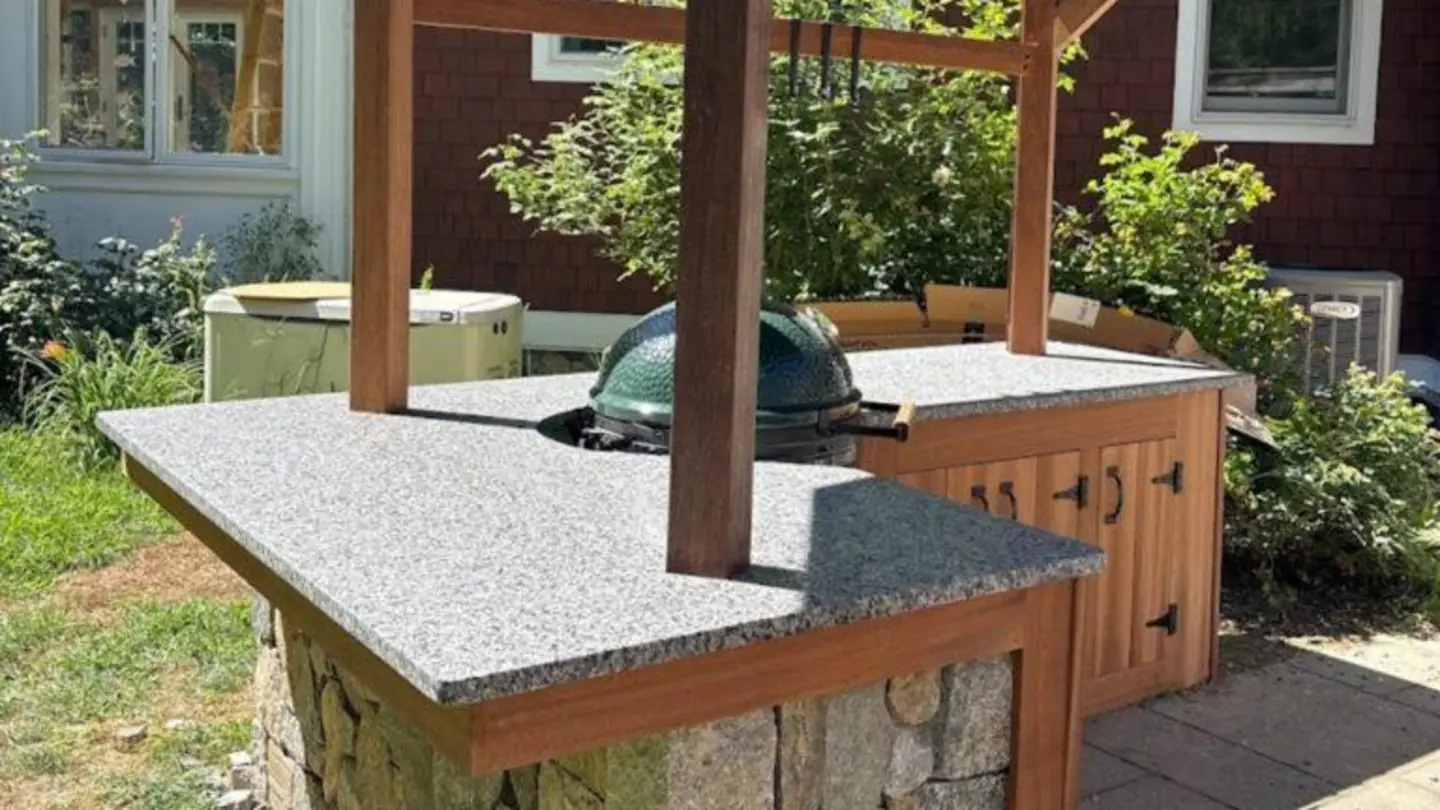
Outdoor lighting, specified with the room
Entry & garage
Wall lanterns and flush fixtures scaled to the door, usually one size larger than people buy, in a wet-rated, New-England-weather finish.
Path & step lights
Low-voltage path lights and recessed step and riser lights on the deck and walkways, for footing you can trust.
Soffit & downlighting
Recessed soffit lights for even wash on the walk and a moonlight effect through trees.
Landscape & uplighting
Uplights on specimen trees and the facade, and well lights for stone walls and plantings.
Timers & photocells
Astronomical timers and photocells so it is on at dusk and off at midnight without you thinking about it.
Done with the project
Sleeves and conduit run during the patio or hardscape work, not trenched in later.

Line-voltage or low-voltage?
Low-voltage (12V) for path, step, uplighting and landscape work, safer to run, easier to adjust, and the fixtures are smaller. Line-voltage (120V) for wall lanterns at the doors and any high-output flood. Most projects use both.
How bright should the entry lanterns be?
People almost always buy them a size too small. A fixture should be roughly one-third the height of the door for a single lantern, or one-quarter each for a pair. Warm color temperature (2700K), and put them on a photocell or an astronomical timer.
Can you add lighting to an existing yard?
Yes, though it means some trenching for the cable runs. The cheapest time is during any patio, walkway or deck work, we sleeve conduit under the hardscape then, so nothing has to be dug up later.
Outdoor lighting
Order online with secure checkout, or have our crews install it with the rest of the project.
Book a consult
Tell us the room, a rough budget range and when you'd like to start. We'll come back with next steps and a realistic timeline, no pressure, no mystery pricing.